
Aerospace and defense cleanrooms we build
Cleanroom requirements vary widely across this sector. Here are the core environments Encompass designs for.
From avionics and satellite assembly to defense systems and propulsion components, contamination can mean mission failure — or worse. At Encompass Cleanrooms, we design and build contamination-controlled environments engineered to meet the precise requirements of aerospace and defense manufacturing.
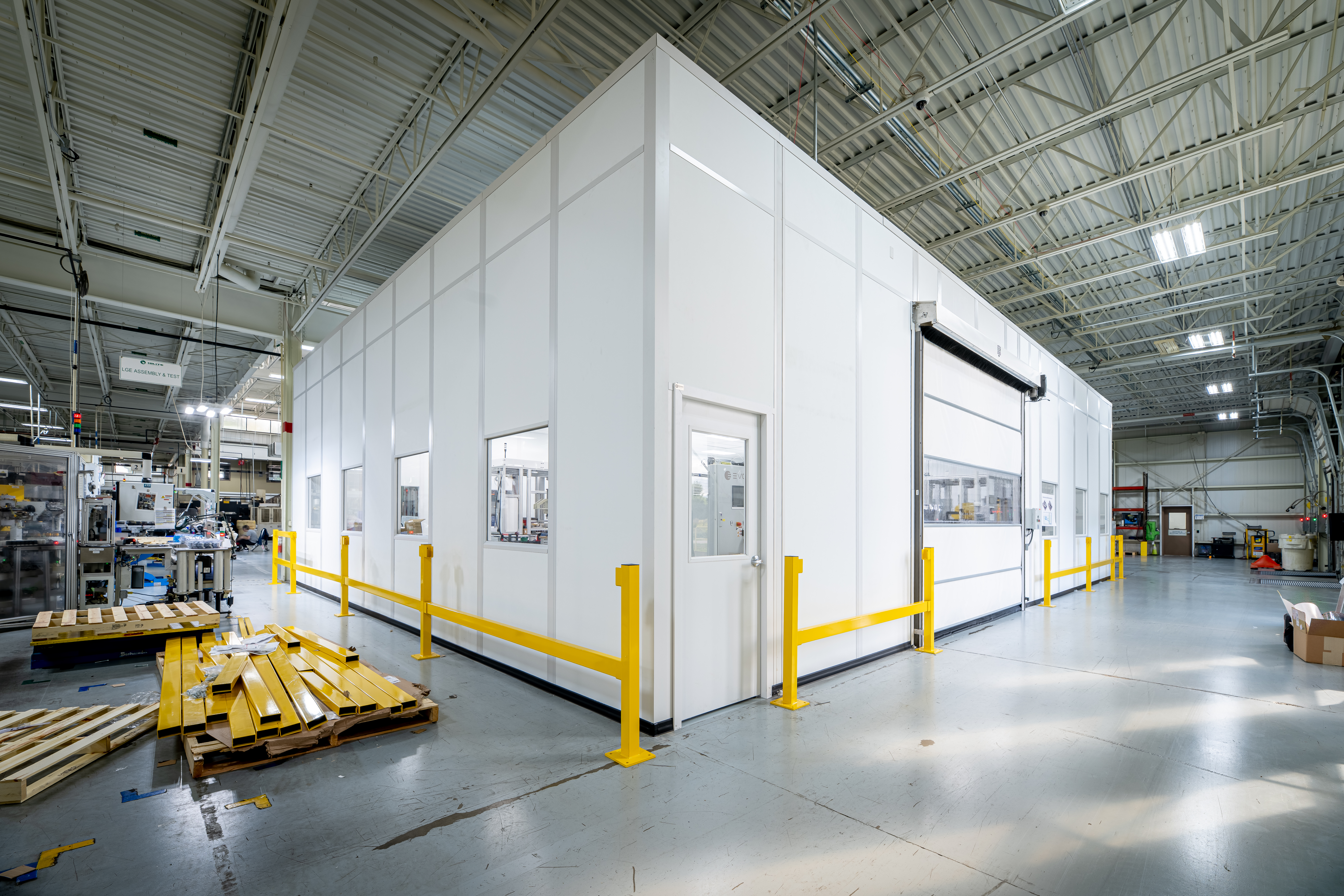
In aerospace and defense, the margin for error is effectively zero. A microscopic particle on an optical sensor, a contaminant introduced during avionics assembly, or an airborne element compromising a structural composite — any of these can trigger failures that are catastrophic, costly, and in some cases irreversible. The contamination stakes here are simply different than in most other industries.
Encompass Cleanrooms specializes in designing and building aerospace and defense cleanrooms that meet ISO Class 5–7 requirements, depending on your process. We start with your specifications—not a standard catalog—and engineer each environment to match your classification requirements, facility constraints, and operational realities. The result is a cleanroom built precisely for what you're manufacturing.
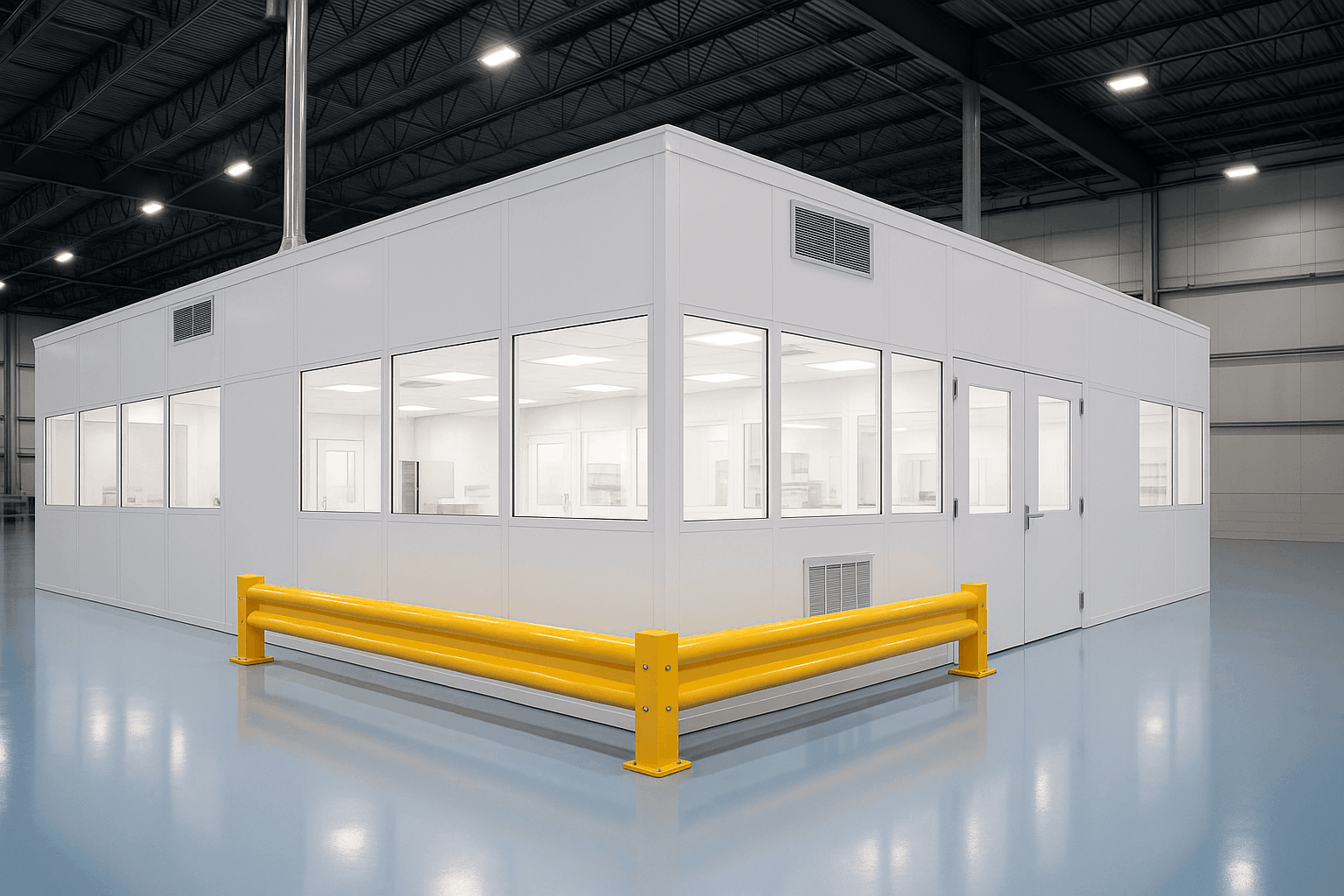
Cleanroom requirements vary widely across this sector. Here are the core environments Encompass designs for.
From flight control systems to communication hardware, aerospace electronics demand environments free from particulates, electrostatic discharge, and off-gassing. Cleanrooms provide the precise conditions needed for circuit assembly, sensor calibration, and performance testing.
Once a satellite is launched, contamination can't be corrected. Cleanrooms protect sensitive payloads, precision optics, and onboard systems throughout assembly and pre-launch testing. This ensures that your components perform exactly as designed once they're beyond reach.
Guidance systems, weapons components, and classified assemblies require the same contamination control as any other high-precision manufacturing process, but with the added dimension of physical security. Our cleanrooms can integrate access control and door locking systems that support both contamination management and operational security requirements.
These industries often demand the most stringent and durable cleanroom environments. Structure selection depends on your ISO classification, footprint, and whether your program will need to adapt over time.
Hardwall cleanrooms are the preferred choice for most projects in these sectors. Their solid, non-porous panel construction delivers superior particle containment, pressure control, and environmental stability. That makes them well-suited for ISO Class 5 and stricter requirements. And they integrate seamlessly with HVAC systems, airlocks, and pass-through chambers for precise regulation of temperature, humidity, and pressure.
For aerospace and defense programs that need strong environmental control alongside the ability to reconfigure or scale as projects evolve, rigidwall cleanrooms are a strong option. Built with clear rigid panels for visibility and structural reliability, they support ISO Class 5–8 environments and can be expanded or relocated as your facility or program requirements change.
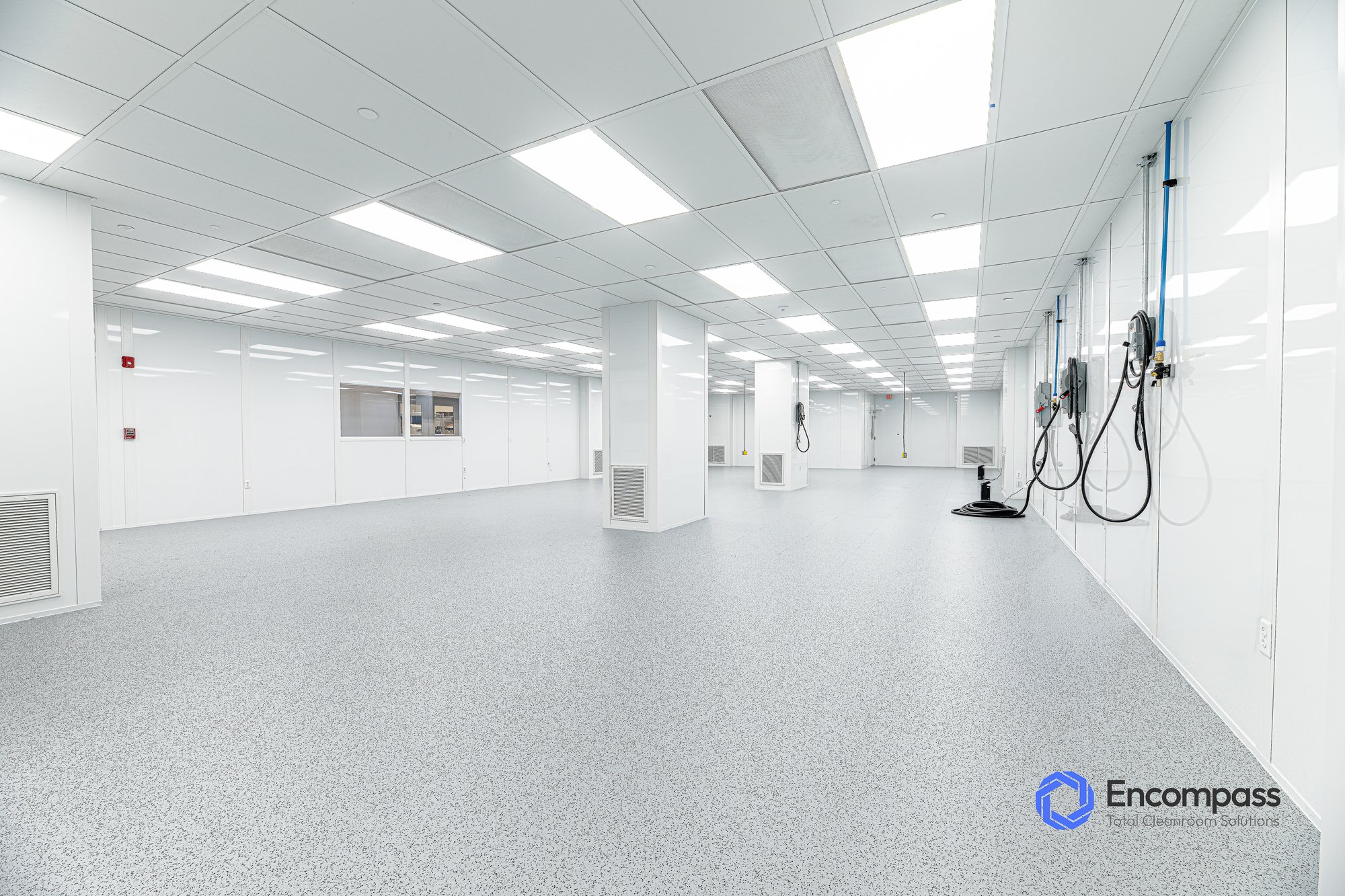
Maintaining your cleanroom's classification over time is just as important as the initial build, especially in aerospace and defense (where recertification and ongoing compliance are non-negotiable). Encompass provides comprehensive maintenance services, including certification, HEPA filter replacement, HVAC servicing, environmental monitoring, and testing support to keep your cleanroom performing at the level your work demands.
Every aerospace and defense cleanroom project starts the same way – with what you are manufacturing and what your process actually requires. We don't lead with a catalog of options. Instead, we start with your specifications and your facility. From there, we help you determine the right classification, structure, and configuration without overbuilding something you don't need.
And the whole time, from design through installation to certification, you work with one point of contact. That means no fragmented vendor coordination, gaps in accountability, or surprises at certification time. We build environments that pass, and we make sure you understand why every specification decision was made.
Most aerospace and defense cleanroom work falls within ISO Class 5 through ISO Class 7, though the right classification depends on what you're manufacturing and the contamination sensitivity of the specific process:
Keep in mind that classification is determined by your component specifications and program requirements, not by industry default. That’s why we work through this determination with you before making any design decisions.
The standards aerospace and defense manufacturers adhere to depend on their customer, program, and product type:
In many cases, OEM or prime contractor specifications are as demanding as any government standard. Understanding which standards actually apply to your program, and what they require versus what they leave to interpretation, is where we start every aerospace and defense project.
Defense manufacturing introduces requirements that some cleanroom builders aren't equipped to address, such as controlled access, restricted sight lines, documentation for classified assemblies, and, in some cases, compartmentalization within the cleanroom itself.
But Encompass designs cleanrooms that can integrate access control systems, badge readers, and controlled entry points without compromising the contamination control integrity of your environment.
The structural features that make hardwall cleanrooms effective for contamination control (sealed panels, recirculating airflow, positive pressure) are also an added benefit when designing to managing security and physical access. These requirements don't need to have tension between them if the design accounts for both from the start.
Yes, and this is one of the biggest advantages of modular construction in aerospace and defense.
Programs often have defined lifecycles. A cleanroom built for a specific satellite assembly program may need to be repurposed, downsized, or relocated when that program concludes. Modular hardwall and rigidwall systems are designed for exactly this kind of adaptability, as panels can be reconfigured, footprints expanded or contracted, and the structure relocated to a new facility if needed.
That reconfigurability is an important financial consideration for programs operating on fixed-term contracts, where a permanent stick-built cleanroom represents a sunk cost once the work is done.
Significant. Over-specifying typically happens in one of two ways:
Both drive up initial construction costs and ongoing operational expenses.
In aerospace and defense, where program budgets are closely managed, and cleanroom specifications often come from program requirements (rather than a cleanroom engineer), there's a natural tendency to spec conservatively. That caution is understandable, but conservative specifications have real cost implications.
A cleanroom built to ISO Class 5 for a process that could perform reliably at ISO Class 6 or 7 can mean hundreds of thousands of dollars in unnecessary HVAC, filtration, and infrastructure. Our team helps you validate your specifications against the actual process requirements so you don’t spend more than you need to.
Whether you're starting from a set of specs or still working through your requirements, we're ready to help. Reach out to start the conversation.