
bg-img

Automotive cleanrooms engineered for excellence

Safety, efficiency, and reliability drive the automotive industry. At Encompass Cleanrooms, our tailored contamination-free environments offer the foundation you need to eliminate risk in the manufacturing process and deliver superior components.

bg-img

Achieve uncompromising component cleanliness

Contamination can lead to costly defects, component failure, and product recalls. In modern automotive manufacturing—where sensors, ECUs, and electrical components define vehicle performance—cleanrooms are a critical part of your process. They enable your operation to uphold component cleanliness to protect your reputation and meet regulatory requirements.

At Encompass Cleanrooms, we specialize in designing and building automotive cleanrooms that meet the rigorous ISO classifications, typically Classes 5-8 for these applications. Whether you're assembling electrical components or glass and mirrors, our highly-skilled technical team customizes every cleanroom to your specific needs.

Supporting advanced automotive applications

Not only are automotive cleanrooms indispensable for the production and testing of traditional mechanical parts—but also high-precision electronics and advanced assemblies.
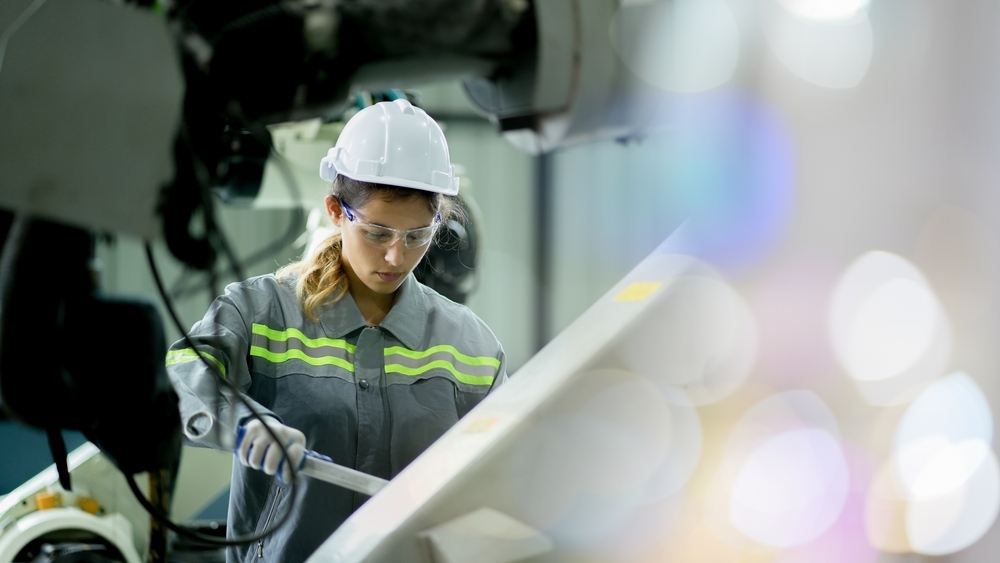
Electronic parts manufacturing

Automotive cleanrooms protect sensitive electronic components from moisture, particulates, and other contamination threats that can compromise performance and safety.

Electronic Control Unit (ECU) assembly

ECUs manage everything from engine performance to crash detection. Cleanrooms ensure these sensitive electronic systems are built without interference from airborne contaminants.

Automotive sensor manufacturing

From LiDAR to ultrasonic and radar sensors, these components are key to ADAS and autonomous systems. Cleanrooms provide protection for sensor calibration and assembly.

bg-img

Cleanrooms for every automotive process

Selecting the right structure is essential when building your automotive cleanroom[h]. Hardwall and rigidwall cleanrooms offer the ideal balance of performance, flexibility, and durability for these applications. Each of them can be freestanding or integrate with your existing infrastructure.

Hardwall cleanrooms:

Designed for maximum control over airflow, pressure, and cleanliness. Suitable for the most stringent ISO classifications, they provide a sealed, durable environment ideal for high-precision automotive manufacturing.

Rigidwall cleanrooms:

Built with clear Rigidpanels for visibility, these sleek cleanrooms are a popular choice for ISO Class 5-8 environments. They’re cost-effective, quick to install, and often ideal for component assembly and electronics manufacturing.

Bringing automotive expertise to every project

Not sure where to start or which classification you need? Our cleanroom specialists have extensive experience in automotive cleanroom construction. Reach out for guidance.

An ongoing commitment

An ongoing commitment to optimal performance

Automotive cleanrooms must be regularly maintained to preserve their classifications and effectiveness. From HVAC servicing and HEPA filter replacement to deep cleaning and testing support, Encompass offers full-service cleanroom maintenance.

Our proactive service approach means you don’t have to worry about contaminants interfering with your automotive manufacturing process. We’ll help you safeguard your cleanroom investment and component reliability.

Why do automotive manufacturers need cleanrooms, and which components actually require them?

Not every part of automotive manufacturing requires a cleanroom, but some components that are necessary for modern vehicle performance increasingly do. Sensors, ECUs, LiDAR systems, radar modules, and camera arrays are all vulnerable to particulate contamination, moisture, and electrostatic discharge during assembly and calibration.

Contaminants invisible to the naked eye can compromise sensor accuracy, degrade electrical performance, or trigger failures that don't happen until vehicles are in the field. EV battery cell assembly and powertrain electronics have similar sensitivities.

For these components, contamination control is a quality must-have. So the question is a matter of what classification your specific process actually requires. But our engineers work through that with you.

What ISO classification does automotive sensor or ECU manufacturing typically require?

Most automotive electronics manufacturing, including sensor assembly, ECU production, and camera module integration, operates in the ISO Class 6–8 range.

The exact classification depends on the sensitivity of the specific component, contamination tolerance defined by your OEM or customer specifications, and the manufacturing environment you're working in.

ISO Class 7 and 8 are common starting points for automotive electronics, but ADAS and autonomous vehicle sensor systems, where calibration precision is critical, may require a tighter classification. And since automotive cleanroom requirements are largely customer-driven rather than governed by a single regulatory body, specifications often come directly from OEM contracts or supply chain agreements.

We help you evaluate what those requirements actually mean in practice before committing to a cleanroom design.

How do EV battery and powertrain component requirements differ from traditional automotive assembly?

EV battery cell assembly and high-voltage powertrain components have contamination sensitivities that traditional mechanical assemblies don't.

Particulates, moisture, and ionic contamination can compromise battery cell performance, accelerate degradation, and in some cases create safety risks. Dry room requirements, where humidity is controlled to extremely low levels, are common in lithium-ion cell manufacturing and go beyond standard cleanroom contamination control into active desiccation.

Not all EV manufacturing requires that level of control, but the classification and environmental requirements for battery assembly are typically more demanding than those for sensor or ECU work. Understanding where your specific process falls on that spectrum is essential before any design decisions are made.

Can an automotive cleanroom be built to accommodate future production changes or new model requirements?

Yes, and for automotive manufacturers, that flexibility is especially valuable. Product cycles can be short, platform architectures change, and the components that need contamination control are evolving rapidly as electric and autonomous systems continue to develop.

A modular cleanroom can be reconfigured to accommodate new equipment footprints, expanded as production volumes grow, or repurposed entirely when a model cycle ends.

That adaptability is a distinct advantage over permanent construction, where changes to the layout require demolition and a rebuild. If your production environment is likely to change within the life of the cleanroom—and in automotive, it almost certainly will—designing for adaptability from the start is often a wise investment.

What's the difference between a cleanroom and a controlled environment for automotive applications?

The terms are sometimes used interchangeably, but they describe areas that provide different levels of contamination control:

  • A controlled environment manages general air quality, temperature, and humidity within defined ranges, which is appropriate for assembly processes with low-to-moderate contamination sensitivity.
  • A cleanroom is a more precisely engineered environment with defined particle count limits, filtration requirements, pressurization, and personnel protocols that must be maintained and certified to a specific ISO classification.

For automotive companies, the distinction matters when your OEM or customer specifies a classification requirement or when your component's performance is sensitive to sub-micron particulate contamination.

Some automotive manufacturers start with a controlled environment and discover their process actually requires a certified cleanroom after a quality issue comes to light. Having the right specification from the jump avoids that cycle.

Trusted experts in automotive cleanroom design

Turn to Encompass for automotive cleanrooms built on technical precision, regulatory knowledge, and industry experience—even for the most sensitive manufacturing applications.