bg-img

Aviation cleanrooms built for flight-critical manufacturing

In commercial and general aviation, contamination isn't just a quality concern — it's also safety concern. Encompass Cleanrooms designs and builds controlled environments that protect your components, your certifications, and your reputation.

bg-img

When it comes to aviation components, there's no margin for error

Aviation manufacturers and MRO providers operate under some of the strictest quality and regulatory standards in any industry. FAA requirements, AS9100 certification, and OEM specifications all demand that components be manufactured and serviced in environments where contamination is eliminated — not managed after the fact.

Encompass Cleanrooms designs and builds aviation cleanrooms that meet ISO Class 6–8 requirements for a wide range of commercial and general aviation applications. Every project is engineered to match your specific process, not a generic specification that adds cost without adding compliance value.


Where aviation cleanrooms make the biggest difference

Commercial and general aviation manufacturing spans a wide range of precision processes, each with its own contamination risks and classification requirements.
Avionics manufacturing and repair

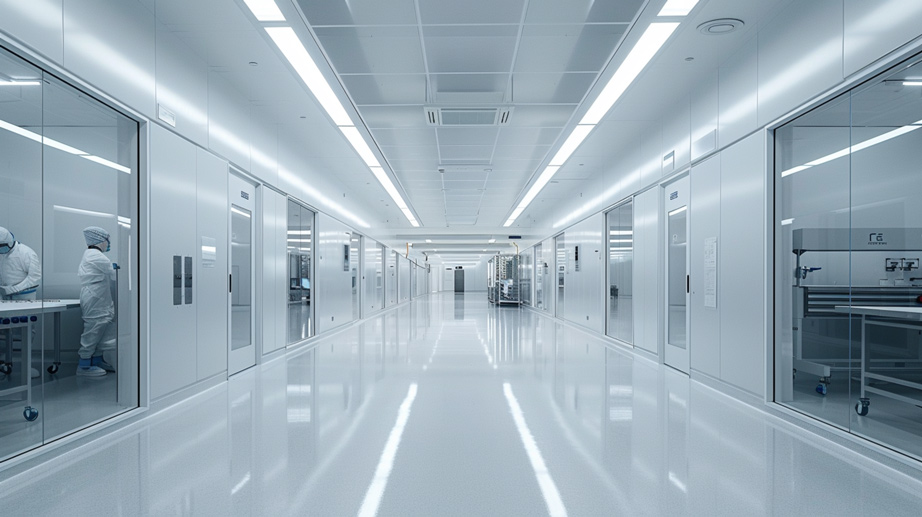
Flight computers, navigation systems, and communication equipment are highly vulnerable to particulate contamination and electrostatic discharge. Cleanrooms protect these components during initial assembly, calibration, and MRO service work.

Flight instrument and sensor production

Altimeters, gyroscopes, air data computers, and other flight-critical instruments require stable, particle-controlled environments during manufacture and testing. Even minor contamination can throw off calibration and create unacceptable measurement error.

Aircraft component manufacturing

Precision mechanical parts—including actuators, fuel system components, and hydraulic assemblies—demand tight manufacturing tolerances that contamination can compromise. Aviation cleanrooms ensure surface cleanliness and dimensional integrity throughout production.

bg-img

Cleanroom types that fit the way aviation companies work

Choosing the right cleanroom design and build depends on your classification requirements, facility layout, and whether you need a permanent installation or a more flexible solution.

Hardwall cleanrooms

Hardwall systems deliver maximum environmental control for the most demanding aviation manufacturing processes. Sealed, durable, and fully customizable, they're well-suited to production environments where consistent pressure and airflow are non-negotiable.

Rigidwall cleanrooms

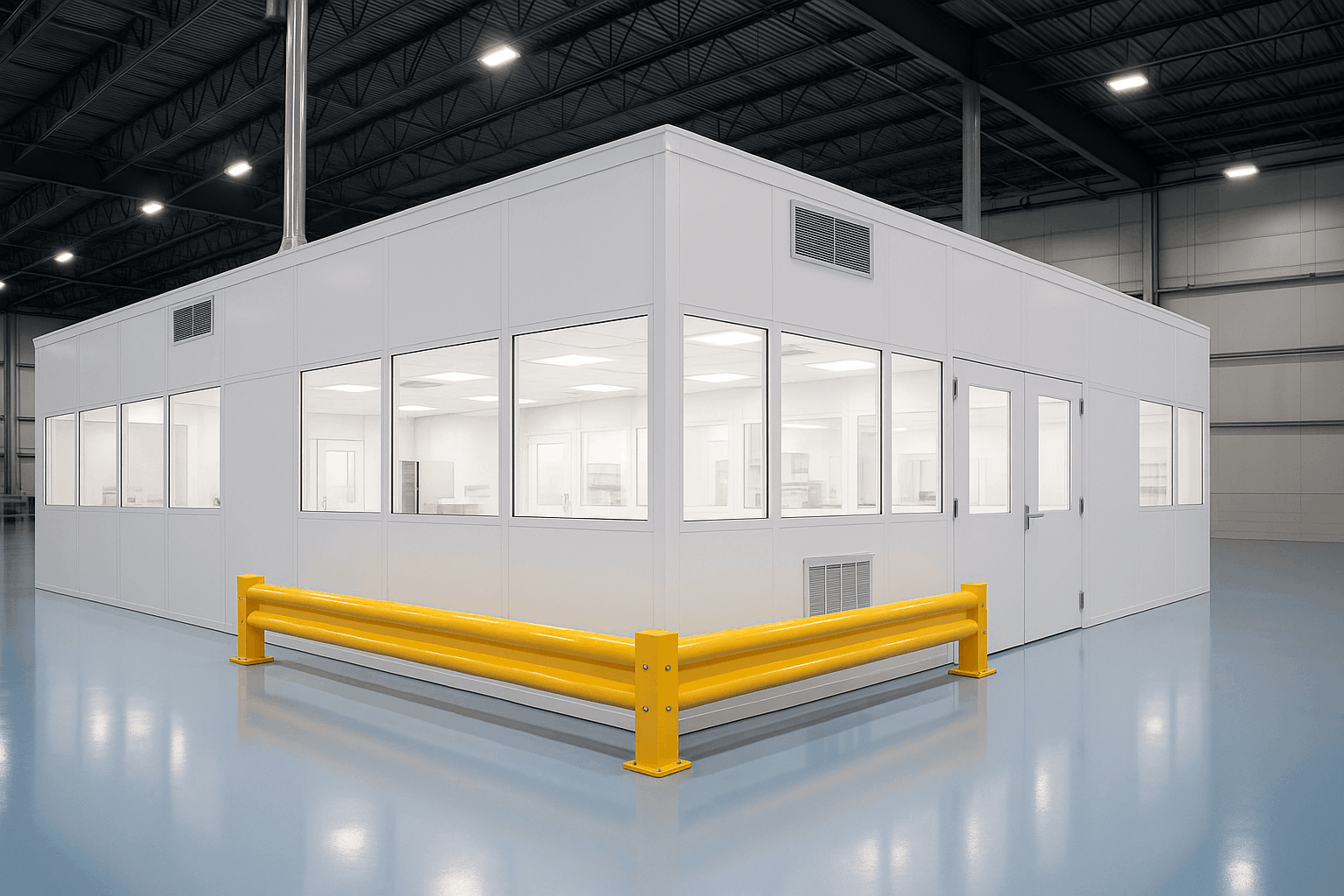
With clear Rigidpanels and a faster installation timeline, rigidwall cleanrooms are an efficient choice for ISO Class 6–8 aviation applications. They're particularly popular for MRO operations, inspection areas, and component assembly, where visibility and accessibility matter.
Getting your classification right from the start

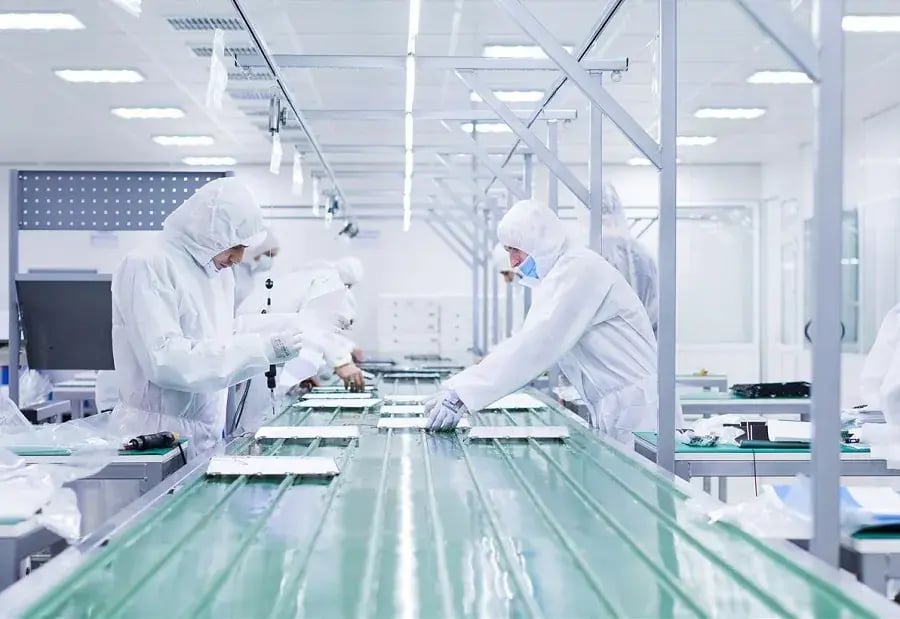
Over-specifying an aviation cleanroom is a surprisingly common—and expensive—mistake. Our team works with you to evaluate your specific components, processes, and regulatory requirements.

Assuring you we can design and build a room that will meet your specs, and confidence that it will pass certification.

Encompass Aviation Cleanrooms image

Maintenance that keeps your cleanroom airworthy

An aviation cleanroom that drifts out of specification creates the same risk as one that was never built correctly. Encompass provides full-service cleanroom maintenance, including HEPA filter replacement, HVAC balancing, particle count testing, and recertification support.

We use a proactive maintenance approach to keep your facility in continuous compliance so your team can focus on production, not troubleshoot environmental issues that shouldn’t exist.
We partner with you beyond installation to ensure your cleanroom continues meeting all expectations year after year.


What regulatory standards apply to aviation cleanrooms, and how do FAA requirements shape the design?

Aviation manufacturers and MRO providers operate under FAA oversight and AS9100 certification (the aerospace and aviation industry's standard for quality management).

FAA regulations don't directly assign specific cleanroom classifications, but they do mandate that components be manufactured and serviced in environments suited to what’s actually being built or serviced. Factors like OEM specifications, airworthiness directives, and customer quality requirements typically define those environmental standards.

For MRO providers specifically, the Repair Station certification process requires documented evidence that service environments meet appropriate conditions for the work performed. In these cases, cleanroom design needs to support the documentation trail in a way that can hold up in an FAA or OEM quality audit.

What's the difference between cleanroom requirements for new component manufacturing versus MRO operations?

New component manufacturing typically involves tighter, more consistent contamination control requirements. The process is defined, the classification set at design, and the environment must reliably maintain that specification over time.

MRO (maintenance, repair, and overhaul) operations introduce different challenges. Components arrive from the field in unknown condition, personnel and parts move in and out frequently, and the work may involve disassembly, inspection, and reassembly of sensitive systems under the same roof as less clean activities. This variability means MRO cleanrooms often need more attention to airlock design, gowning protocols, and physical separation from adjacent work areas than a dedicated manufacturing cleanroom would.

The classification requirements for MRO may be similar to manufacturing, but the design approach to achieving and maintaining them is different.

What ISO classifications are typical for commercial aviation versus general aviation applications?

Commercial aviation processes, like avionics manufacturing, flight instrument production, and MRO work on flight-critical systems, typically fall in the ISO Class 6–7 range. Within these classes, article counts are tightly controlled, and filtration requirements are well-defined.

General aviation applications tend to be somewhat less stringent, often ISO Class 7–8, depending on the component and the OEM or customer specification driving the requirement.

In both cases, the right classification is determined by the sensitivity to contamination for a specific component (and any regulatory or contractual requirements), not by a general industry default. Over-specifying is a common and expensive mistake in aviation, where program timelines are tight, and budgets are closely managed.

How do you maintain cleanroom compliance in an MRO environment with frequent personnel and component turnover?

Maintaining classification in an MRO environment is primarily a function of three things:

  1. Gowning protocol discipline
  2. Airlock and material transfer design
  3. A consistent maintenance and recertification schedule

Frequent personnel changes mean that gowning training needs to be standardized and enforced (not just assumed). Components arriving from the field introduce contamination risk that airlocks and material transfer protocols are designed to manage.

Because MRO facilities experience more variability in activity levels than dedicated manufacturing environments, scheduled particle count testing and HVAC validation are especially important. Drift in classification can happen gradually and go undetected without a proactive monitoring program.

Encompass designs MRO cleanrooms with these operational realities in mind, and supports ongoing compliance through maintenance and recertification services after installation.

Can an aviation cleanroom be expanded or reconfigured as MRO capacity grows?

Yes. Aviation MRO operations are particularly well-suited for modular cleanroom construction because capacity needs tend to grow as contract volume expands or new aircraft programs come online.

Modular systems can be expanded by adding panels and ceiling sections without demolishing or rebuilding the existing structure, which means growth doesn't require taking the cleanroom offline for an extended period.

If your MRO facility moves to a new location (which isn’t uncommon as leases turn over or operations consolidate), the cleanroom can be disassembled and relocated rather than written off as a loss. For organizations managing capital budgets across multiple programs, the reconfigurability makes a big difference in the total cost of ownership compared to permanent construction.

Trusted experts in aviation cleanroom design

Turn to Encompass for aviation cleanrooms that are engineered to the right specification, built on time, and backed by the technical expertise your process demands.